
It is with great pleasure that we announce the successful completion of
ICFULL & GLoCALL Conference, 2025
Beijing, China
23-25 May 2025
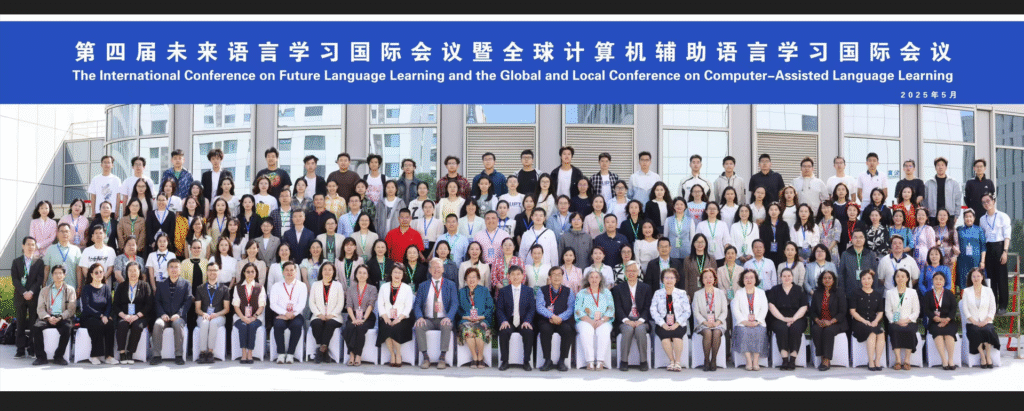
To view more conference photos please click the link below:
https://live.photoplus.cn/live/27643996?accessFrom=qrcode#/live
INFORMATION REGARDING THE CONFERENCE
The International Conference on Future Language Learning (ICFULL 2025) AND the Global and Local Conference on Computer-Assisted Language Learning (GLoCALL 2025) is organised by the School of Humanities of Beijing University of Posts and Telecommunications in Beijing China. The Asia-Pacific Society for Computers in Education and PacCALL provide academic consulting and supporting services for the conference. The conference offers a platform for academics, researchers, and practitioners from transdisciplinary fields such as computer science, linguistics, educational technology, and various language education disciplines worldwide. It will facilitate idea-sharing, promote research, practice, and theory-building, and explore innovative approaches to drive future language learning. The conference programme includes pre-conference workshops, keynotes, forums, and concurrent paper presentations. All the accepted papers in the conference will be published in ISBN-coded proceedings.
Theme: Picturing the Future of Language Education in the Intelligence Era
The rapid expansion of intelligent technologies is reshaping theories, methodologies, and practices in technology-enhanced language learning (TELL) giving rise to new language teaching and learning phenomena. This has sparked global interest around the world in the role of technology in language education, particularly in its potential to provide greater access, affordability, and personal learning experiences. The future of language learning in the ever-changing digital and intelligent era needs to be constantly envisioned. ICFULL & GloCALL, 2025 will convene in Beijing from 23-25 May 2025 to explore future and current issues surrounding the impact of intelligent technologies on language learning.
IICFULL & GloCALL, 2025 aims to bring together scholars and practitioners to share their insights and explore the potential of advanced technologies in shaping the future of language education. The conference invites original research on theories, methodologies, and pedagogies in Technology-Enhanced Language Learning (TELL). Key areas of focus include AI-supported language learning, personalised and adaptive learning, digital game-based learning, technology-assisted self-directed learning, learning analytics in language education, and assessment using emerging technologies. Additionally, it welcomes studies on the design and application of new technologies in language learning. Ethical considerations surrounding TELL will also be discussed to deepen understanding of the human-machine relationship. In summary, ICFULL & GloCALL 2025 seeks to illuminate the current landscape and future directions of language learning powered by technological innovation.
Papers: Scope of Interests
The scope of interests encompasses a wide range of topics, including but not limited to:
- Educational Technology: Promoting innovations, policies, and practices
- Learning Analytics: Implementing its applications in language learning
- Adaptive/Personalized Learning: Enhancing Tailored educational experiences
- AI-Supported Language Learning: Leveraging artificial intelligence in language education
- Chatbots: Decoding their role in language learning
- Language Assessment: Utilising emerging technologies for evaluation
- Corpus-Based and Data-Driven Learning: Deriving insights from Linguistic Data
- Ethical Issues: Addressing challenges in technology-supported language learning
- Immersive Technologies: Facilitating language learning through augmented, virtual, and mixed reality
- Digital Game-Based Learning: Integrating gamified approaches with language education
Paper presentations for this conference take the form of oral presentations and the duration for one paper presentation is 20 minutes, including Q & A.
Submission: Abstract (compulsory)
A submitted abstract must be between 200-250 words in English. Abstracts should be submitted online in both MS Word and PDF formats. Please sign up to the EasyChair system (https://easychair.org/conferences?conf=icfullglocall2025.) and upload your abstract following the instructions provided. Before submission, please carefully read and follow the conference templates (Click Here). Submissions must not be published previously. All the submissions will be double-blind peer-reviewed. The review will focus on whether the work is original and of good quality. Each Presenter is allowed to present one paper as first author and two papers as co-authors.
Full paper submissions (optional)
Presenters will be invited to submit full papers for consideration for publication by the Journal of China Computer-Assisted Language Learning ((eISSN: 2748-3479, open access), and CALL-EJ (Scopus Journal) after the conference.
(1) Information on Conference Venue and hotels
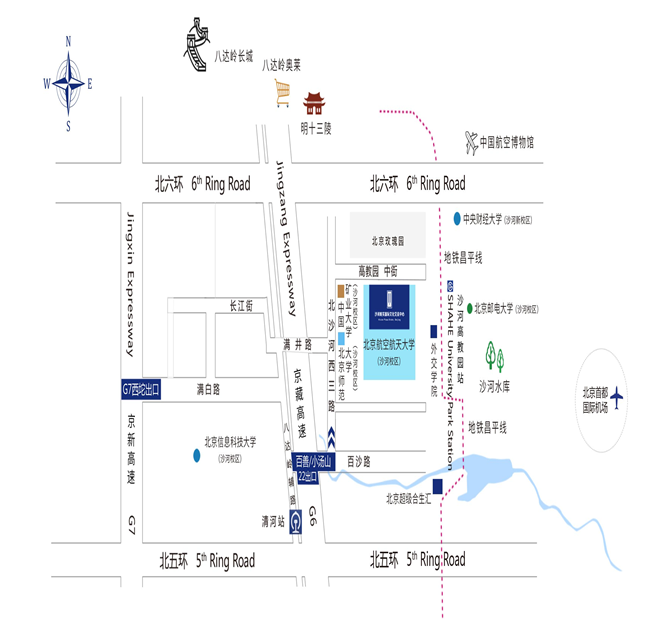
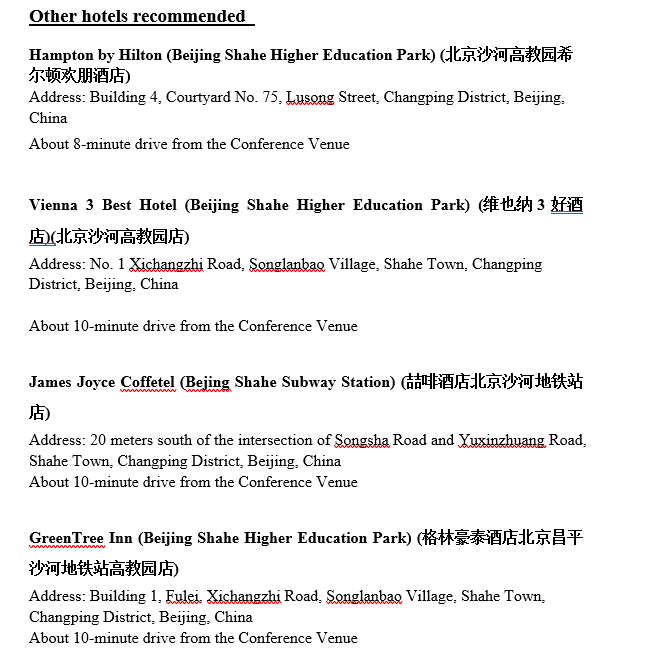
Transportation
(A) From Daxing Internation Airport to Vision Plaza Shahe
(i) Metro Transfer and Taxi (recommended):
Take the Daxing Airport Express from Daxing Airport Station to Caoqiao Station. Transfer to Line 19 (Bound for Mudantyan) , get off at Mudanyuan Station (牡丹园站), and then take a taxi to Vision Plaza Shahe.
(ii) Alternative via Beijing Daxing International Airport Shuttle Bus. Take the Airport Shuttle Bus ( Bound for Zhongguancun), get off at Sitongqiaoxi and then take a taxi to Vision Plaza Shahe.
(B) From Terminal 3, Beijing Capital International Airport to Vision Plaza Shahe — About 43-minute drive
(C) From Beijing South Railway Station to Vision Plaza Shahe — About 70-minute drive
Distance to the main tourist attractions in Beijing
About 70-minute drive from the Conference Venue to:
The Palace Museum
About 40-minute drive from the Conference Venue to Badaling Great Wall
About 35-minute drive from the Conference Venue to The Summer Palace
About 70-minute drive from the Conference Venue to the Temple of Heaven
About 30-minute drive from the Conference Venue to Beijing Olympic Park
Invited Keynote Speakers
Ana María GIMENO

Universitat Politècnica de València (UPV), Spain
Ana GIMENO, President of WorldCALL, is Full Professor of English Language in the Department of Applied Linguistics at the Universitat Politècnica de València (UPV), Spain. Her research focuses on English for Specific Purposes, Computer-Assisted Language Learning, and Content and Language Integrated Learning. Prof. Gimeno is Head of the CAMILLE Research Group, devoted to research in CALL and e-Learning. She has been Project Manager of several funded multimedia CALL research and development projects that have led to the publication of several language courses in digital format. In 2016, she co-authored the first Spanish as a foreign language Massive Open Online Course (MOOC) delivered on the US-based edX platform, which has attracted over half a million learners from around the world and in 2018 she published the first upper-intermediate English edX MOOC, which has attracted over 350000 learners. Ana Gimeno is Associate Editor of ReCALL (Cambridge University Press) and serves on the Editorial Board of Computer Assisted Language Learning Journal (Taylor and Francis), as well as being editor-in-chief of The EUROCALL Review. She was President of the European Association for Computer Assisted Language Learning (EuroCALL) from 2005 to 2011 and is currently President of the world organisation for computer-assisted language learning, WorldCALL (www.worldcall.org).
Peter GOBEL

Kyoto Sangyo University, Kyoto, Japan
Peter GOBEL, the Vice President of PacCALL, is a Professor in the Faculty of Cultural Studies at Kyoto Sangyo University, Kyoto, Japan. He received his doctorate in education from Temple University, with a dissertation on the acquisition and use of listener clarification strategies. He has published and presented research in the areas of 1) anxiety and foreign language learning; 2) learner motivation and attitudes towards success and failure at language learning; 3) second language learner strategies; 4) extensive reading; and 5) the role of technology in education. Current research interests are focused on how learners interact with ICT and CMS both inside and outside of the classroom.
WANG Haixiao
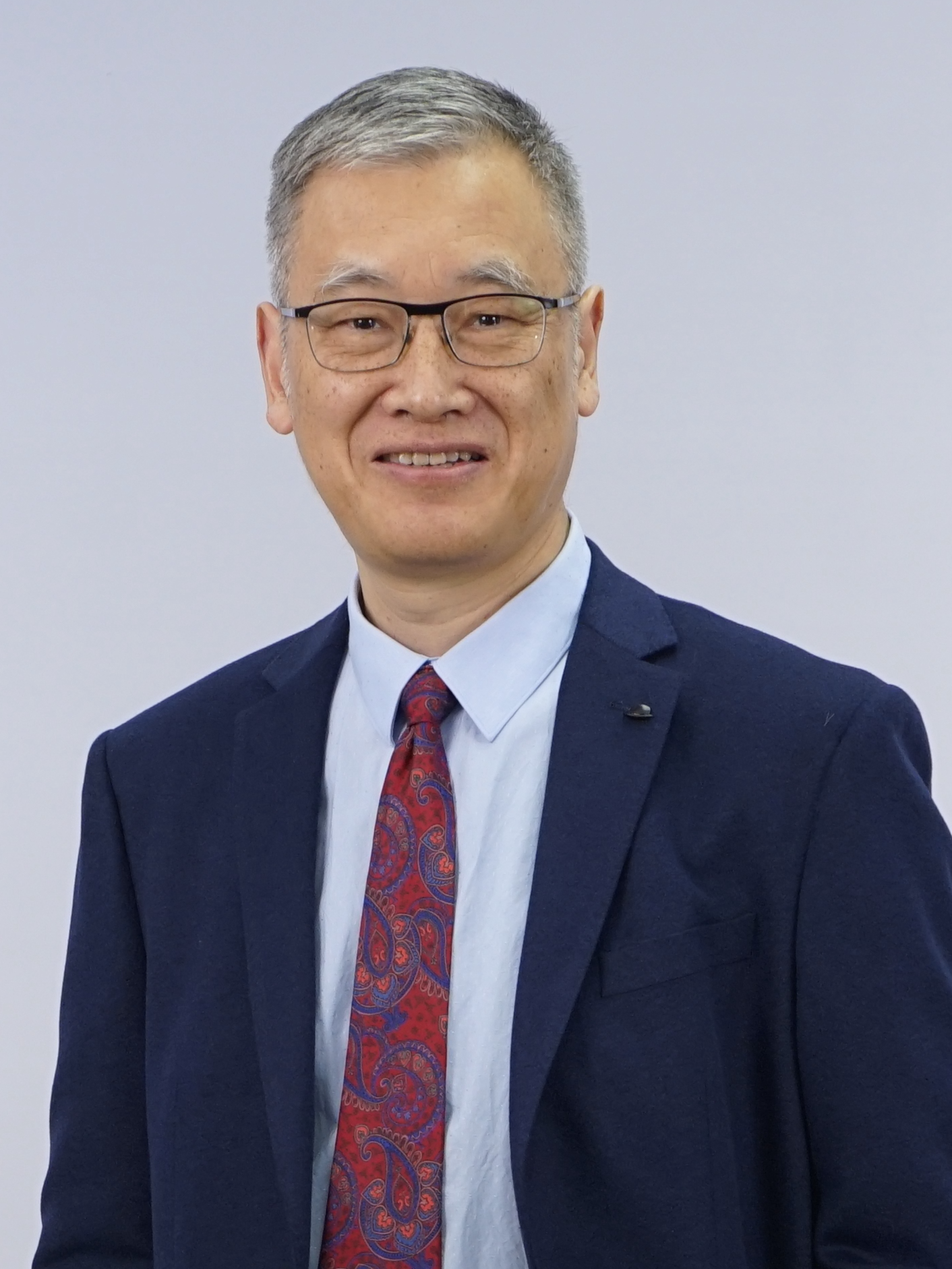
WANG Haixiao is a professor of English and applied linguistics with the Department of Applied Foreign Language Studies, Nanjing University. He obtained his bachelor’s, master’s and doctoral degrees from Nanjing University, Lancaster University and Teachers College, Columbia University respectively. He is the winner of a number of national and provincial awards for teaching excellence and author of dozens of popularly acclaimed textbooks. His research interests include second language acquisition, computer-assisted language teaching, language assessment, and teaching materials development. Currently, he serves as member of the College Foreign Language Teaching Advisory Committee of the MoE, member of the National College English Test Committee, and Vice President of ChinaCALL and PacCALL. He has been playing active roles in a number of national projects for the development and reform of College English teaching and assessment in China.
ZHENG Yongyan

ZHENG Yongyan is Professor of Applied Linguistics at Fudan University, China, where she teaches English academic writing and applied linguistics. She has been on the list of Most Cited Chinese Researchers by Elsevier since 2021. Her research interests include second-language development, multilingualism, and language-in-education policy. She has published 4 monographs and edited volumes, guest-edited 4 special issues, and published more than 120 peer-reviewed journal papers in English, Chinese, and Spanish. She serves as the Editor-in-Chief of Language, Culture and Curriculum, and also the Co-Editor-in-Chief of System. She is also one of the co-founders of Hamburg-Fudan-Macquarie “New Generation Literacies Network”.