***Submission to GLoCALL 2026 Special Issues
CALL For Proposals for GLoCALL 2027
It gives us great pleasure to announce that GloCALL2027 will be held in Ho Chi Minh City, Vietnam. The local organiser of the conference is the University of Economics Ho Chi Minh City (UEH). It will be held at UEH, Vietnam, from 29-31 July 2027.
IMPORTANT DATES:
• Deadline for Abstract Submission: 30 November 2026
• Notification of Abstract Acceptance: From 1 March to 15 March 2027
• Deadline for Registration of all Presenters: 2 April 2027
• Release of a preliminary conference program: 1 June 2027
Please click the link below to submit your abstract.
International participants, please click the link below to submit your abstract.
https://forms.gle/VX61Sg6M2WByQdPv7
Vietnamese participants, please submit to the link below:
Please note Vietnamese participants refer to:
*** Vietnamese citizens currently residing in Vietnam, as well as Vietnamese citizens working or studying abroad.
***International students currently studying in Vietnam.
Other international participants working in Vietnam or other countries must submit through the international link above.
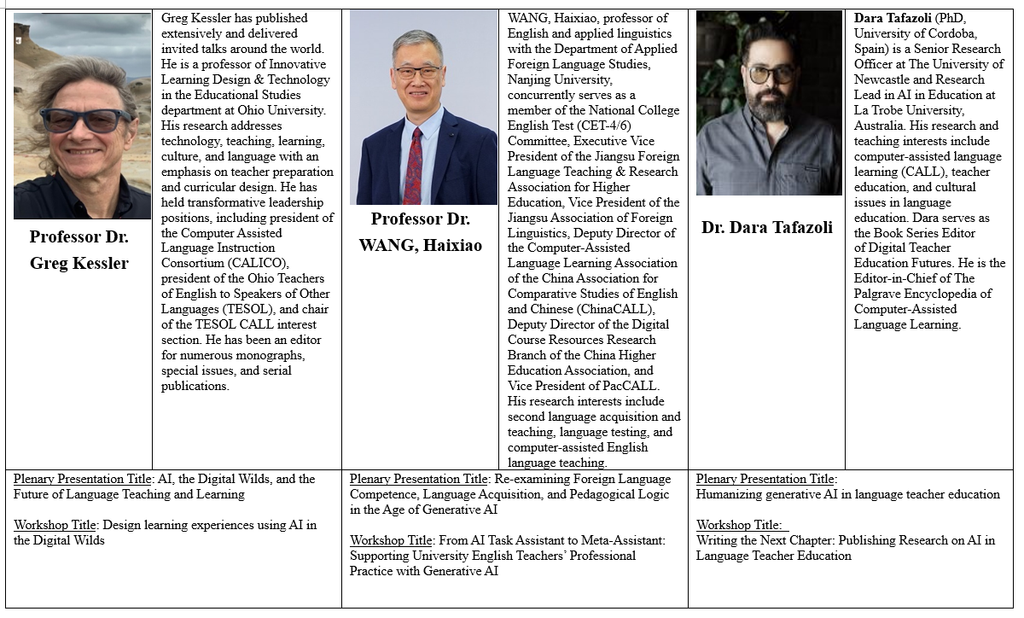
PLENARY SPEAKERS

CONFERENCE TITLE
Emerging Technologies in CALL: Innovation, Transformation, and the Next Generation of Learners
The conference aims to bring together educators, researchers, students, policymakers, and industry experts to discuss how emerging technologies are reshaping language learning and teaching. As digital technologies continue to evolve, the field of Computer-Assisted Language Learning (CALL) is experiencing significant changes, creating new opportunities for learners and educators alike.
Recent developments in Artificial Intelligence (AI), virtual and augmented reality, mobile learning, learning analytics, and adaptive learning technologies have transformed the ways languages are taught, learned, and assessed. These tools offer exciting possibilities for creating more interactive, personalized, and engaging learning experiences. From AI-powered writing assistants and chatbots to immersive virtual environments and data-driven learning platforms, technology is opening up new ways to support language development and learner success.
At the same time, these developments raise important questions about how technology should be used effectively and responsibly in educational settings. Issues such as digital equity, accessibility, ethics, data privacy, and the changing role of teachers need to be carefully considered as institutions adopt new technologies. Educators are increasingly looking for practical strategies and evidence-based approaches that can help them integrate technology meaningfully into their teaching.
This conference provides a platform for sharing ideas, research findings, innovative practices, and real-world experiences related to technology-enhanced language learning. Through keynote talks, paper presentations, workshops, panel discussions, and technology showcases, participants will have opportunities to learn from one another, build professional networks, and explore emerging trends in the field.
By bringing together diverse perspectives from academia, industry, and educational practice, the conference seeks to encourage collaboration and inspire new approaches to language education. Ultimately, it aims to support the development of innovative, inclusive, and learner-centred environments that can prepare the next generation of learners for an increasingly digital and interconnected world.
Target Audience
- Language educators and instructors
- CALL researchers and scholars
- Curriculum developers
- Educational technologists
- Graduate students and early-career researchers
- School administrators and policymakers
- Software developers and EdTech professionals
Proposed Sub-Themes
1. Artificial Intelligence and Language Learning
- Generative AI in language education
- AI-powered tutoring systems
- Chatbots and conversational agents
- Personalized and adaptive learning environments
2. Immersive Technologies for Language Learning
- Virtual Reality (VR) applications
- Augmented Reality (AR) learning experiences
- Metaverse and virtual learning spaces
- Gamification and simulation-based learning
3. Mobile-Assisted Language Learning (MALL)
- Mobile applications for language acquisition
- Ubiquitous and micro-learning approaches
- Social media and language learning
- Mobile assessment and feedback systems
4. Learning Analytics and Assessment
- Data-driven language learning
- Learning analytics for learner engagement
- Digital assessment and e-portfolios
- Automated feedback and evaluation systems
5. Digital Pedagogy and Teacher Development
- Technology integration strategies
- Teacher digital competencies
- Professional development for CALL practitioners
- Innovative classroom practices
6. Equity, Ethics, and Sustainability
- Ethical use of AI in education
- Digital inclusion and accessibility
- Privacy and data security
- Sustainable technology-enhanced learning
Types of Submissions
The conference offers three presentation formats:
● Oral Presentations: The presentations should showcase original research in the field of Computer-Assisted Language Learning (CALL), with particular emphasis on leveraging technology to support future learners. Each presentation is allocated 20 minutes, including a question-and-answer session.
● Poster Presentations: These presentations should feature clear, visually engaging content that can be easily read by attendees and further explained by the presenter. Posters will be displayed throughout the two-day event, while the designated poster presentation session will last one hour. Presenters are expected to be available during their assigned session to discuss their work with attendees.
● Technology Showcases: Technology showcase sessions provide hands-on demonstrations of inclusive and adaptive learning technologies. These sessions are conducted in an informal format, with multiple presenters demonstrating their tools simultaneously. Participants may interact directly with presenters to explore and discuss the technologies in detail. Each showcase session runs for one hour.
Proposal Submissions
- Abstracts are limited to 250 words and must be submitted by 30 November 2026. Authors will receive reviewers’ feedback between 1 and 15 March 2027. Abstracts should be submitted online in both PDF and Microsoft Word formats.
- To provide opportunities for a wider range of researchers, each author may submit and present only one proposal as the lead presenter. In addition, an author may serve as a co-presenter on up to two additional papers.
- Authors are advised to carefully review and follow the conference submission templates before submitting their abstracts. Submitted work must be original and must not have been previously published. All submissions will undergo a double-blind peer-review process conducted by members of the review committee. Proposals will be evaluated based on their originality, academic quality, and relevance to the conference themes.